
Transformative Grant Will Help Restore Sarasota AIDS Memorial
A leafy messenger pays tribute
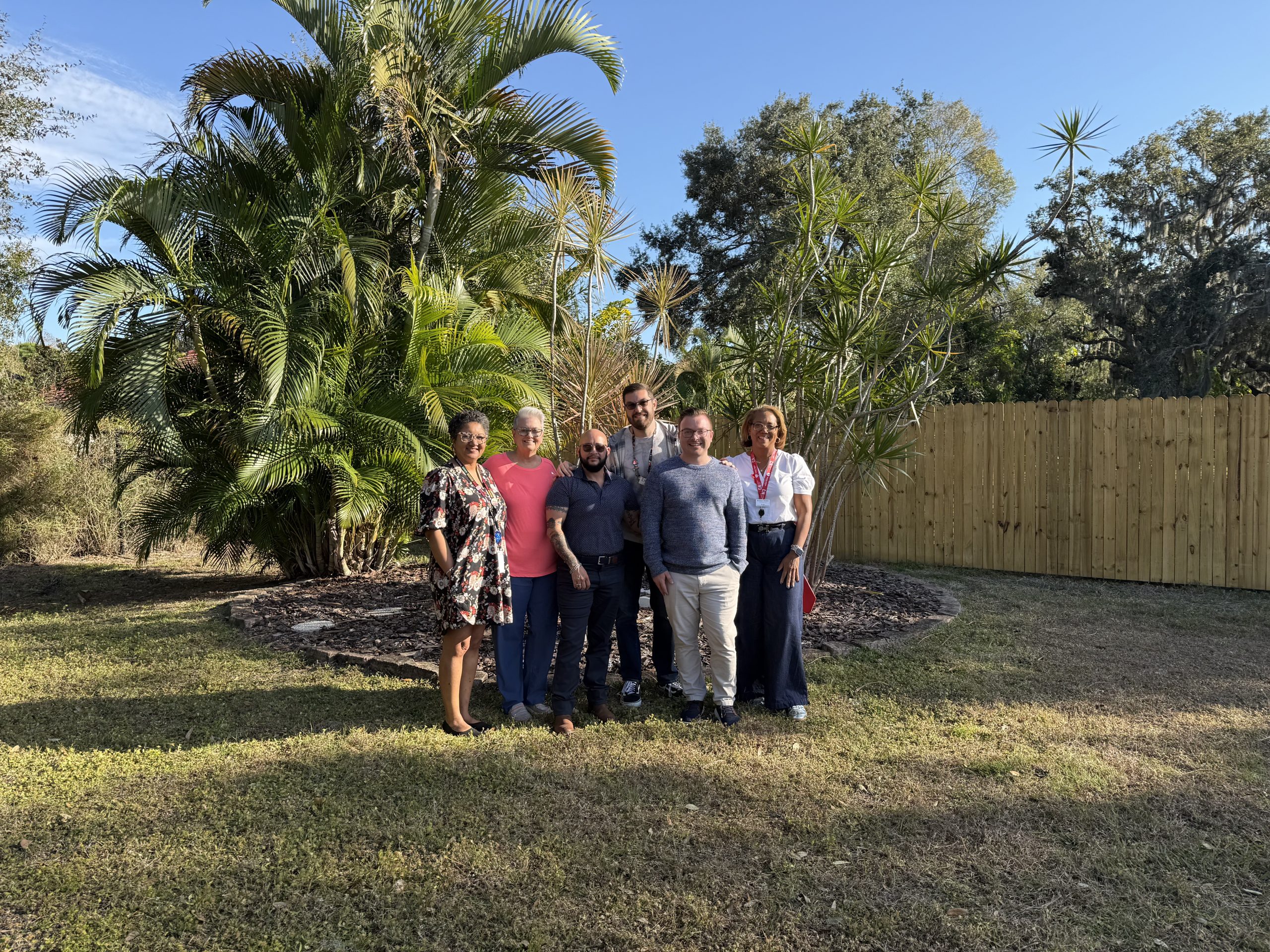
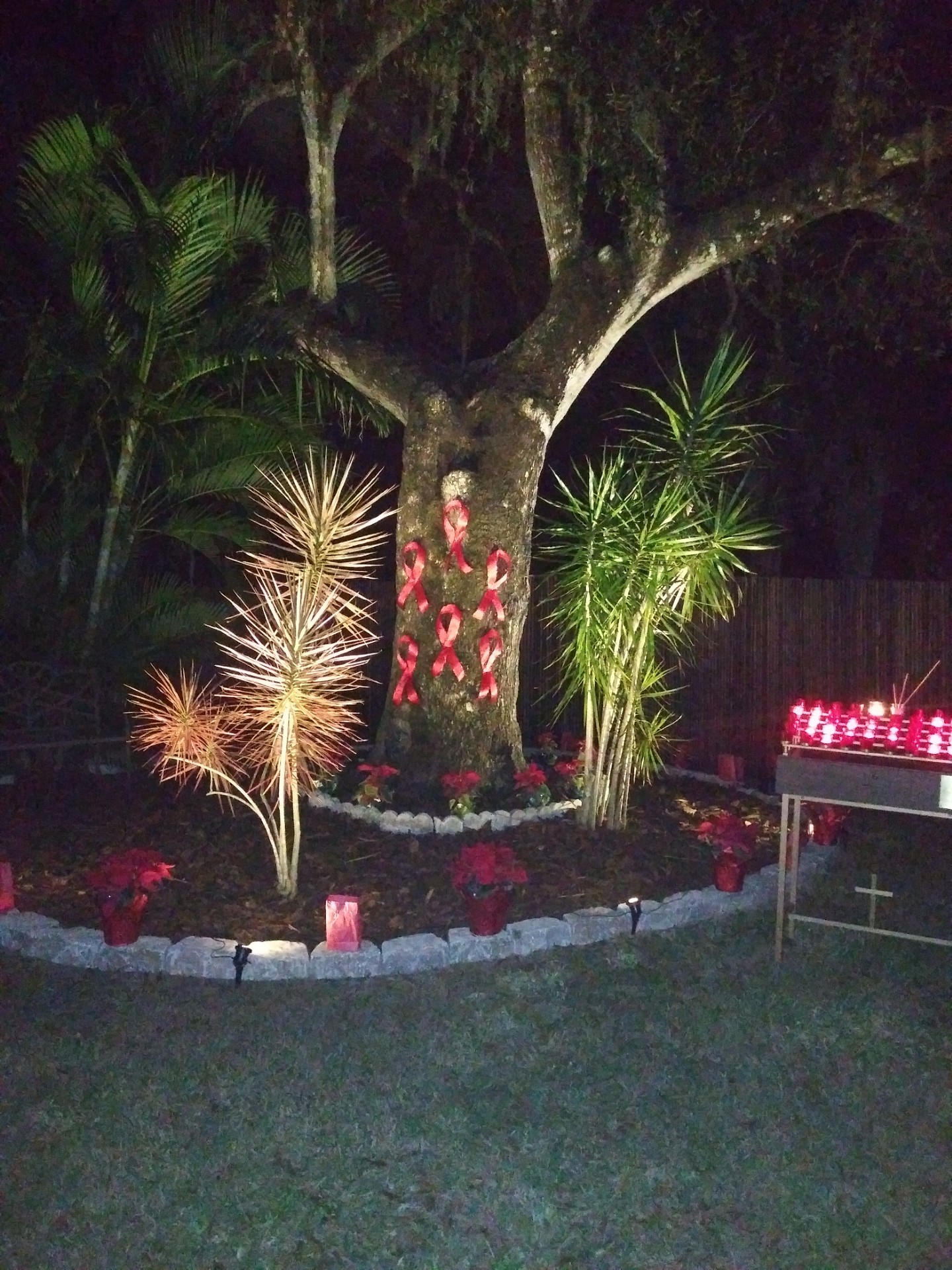
From root to branch tip, the nearly 200-year-old Southern Live Oak standing guard at the southeast corner of the church’s Lockwood Ridge Road campus entwined individuals and families as no other could. Its role as the welcoming, shade-providing centerpiece of Trinity’s AIDS Memorial Garden made it unique in both nature and purpose.
Like other AIDS memorials in the United States from San Francisco to Key West, the memorial at Church of the Trinity MCC symbolizes hope and remembrance. Since the early 1980s, the ashes of an indeterminate number of people who died from AIDS have been scattered there, representing a tiny fraction of AIDS deaths since the first cases were reported in the United States in June 1981 and the 1.2 million people estimated to be living with HIV in this country today.
The memorial also symbolizes justice denied for the members of the LGBTQ+ community who, like that oak tree, stood tall and strong until a then poorly equipped healthcare industry and homophobic society rendered each an outcast.
Though understated, the memorial conveys several important messages. To each individual recognized there, it says, “You will not be forgotten.” To the community at large, it says, “These individuals deserved better.” To an embattled and underrepresented LGBTQ+ community, it says, “Keep fighting.”
Church of the Trinity MCC held its first service in a borrowed sanctuary on Easter Sunday 1983, then purchased its current property in 1988. Guided by Eight Points of Progressive Christianity, the church is committed to compassion, inclusion and the courage to confront injustices and oppression of any kind.
Throughout the 1990s, while some churches imposed restrictions on the way gay people could receive communion, Church of the Trinity and other Metropolitan Community Churches embraced, and literally laid hands on, those with AIDS. This compassion and dedication to inclusion fueled a surge in membership and attendance, requiring the addition of a second Sunday service. The Church also held weekly dinners and set up a food pantry for people with AIDS. The completion of Lockwood Ridge Road to State Road 70 brought greater exposure to the public and a cell tower, in the shape of a cross, made the church even easier to find.
More recently, the church installed a Transgender Memorial Garden to honor the memories of victims of transphobic hatred.
A young minister takes action
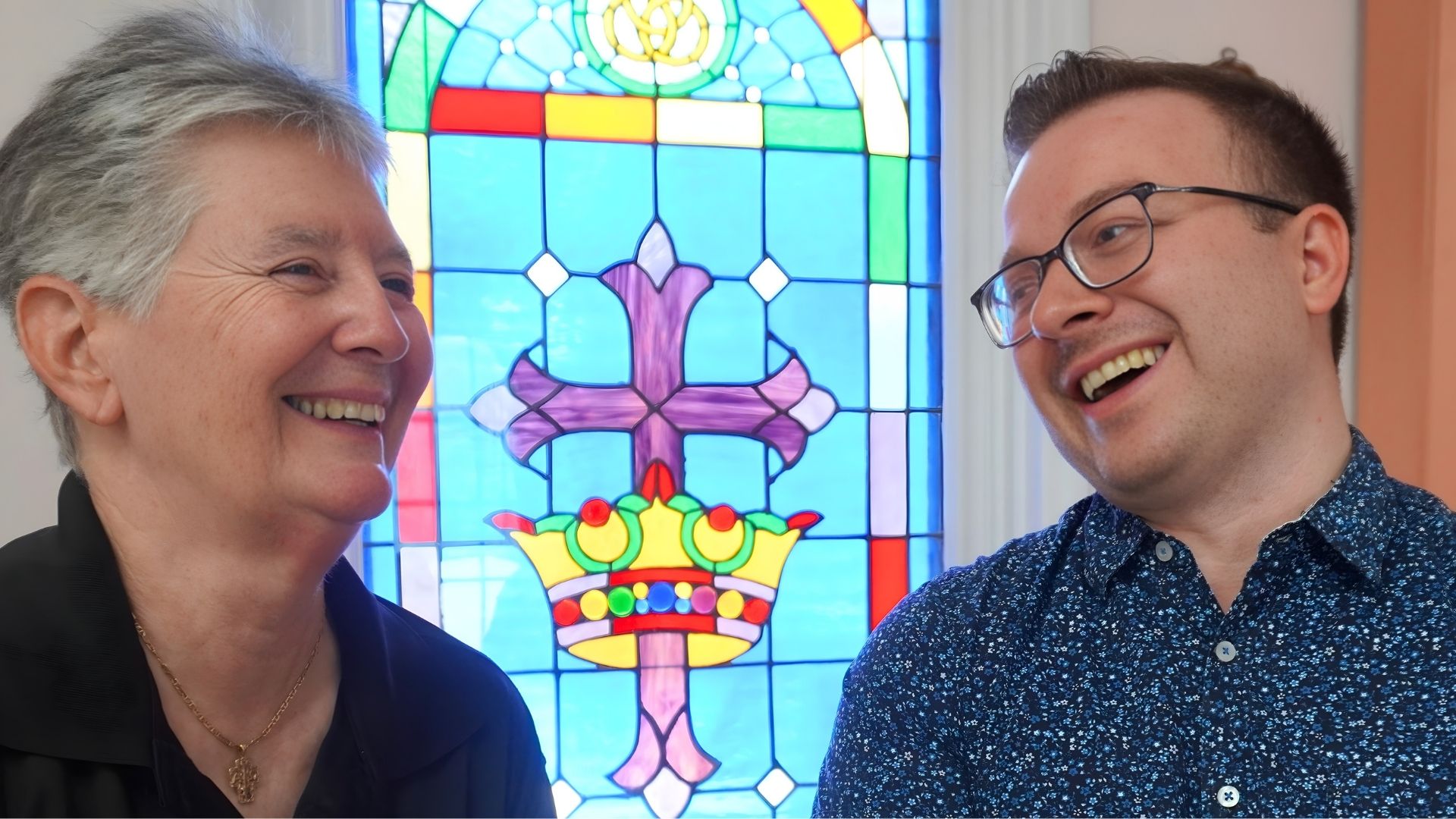
JT Priar is Trinity’s Young Adult Minister. The Kentucky native came to the Sarasota area six years ago to work in professional theater and joined the church staff in 2024, just after the storm. As Priar settled into a demanding role that combines ministry with community outreach and social justice activism, he remembers looking at the damaged memorial and thinking, “We have to do something about this.”
He was intrigued by the memorial’s history and purpose as a place where the ashes of beloved congregants and others were scattered, but sobered by the site’s darker note as a final resting place for people who would otherwise leave no physical mark on this world. As Priar describes it, “Sometimes complete strangers would come in with the ashes of their dead sons and say, ‘Here, we don’t want them anymore, do whatever you want.’”
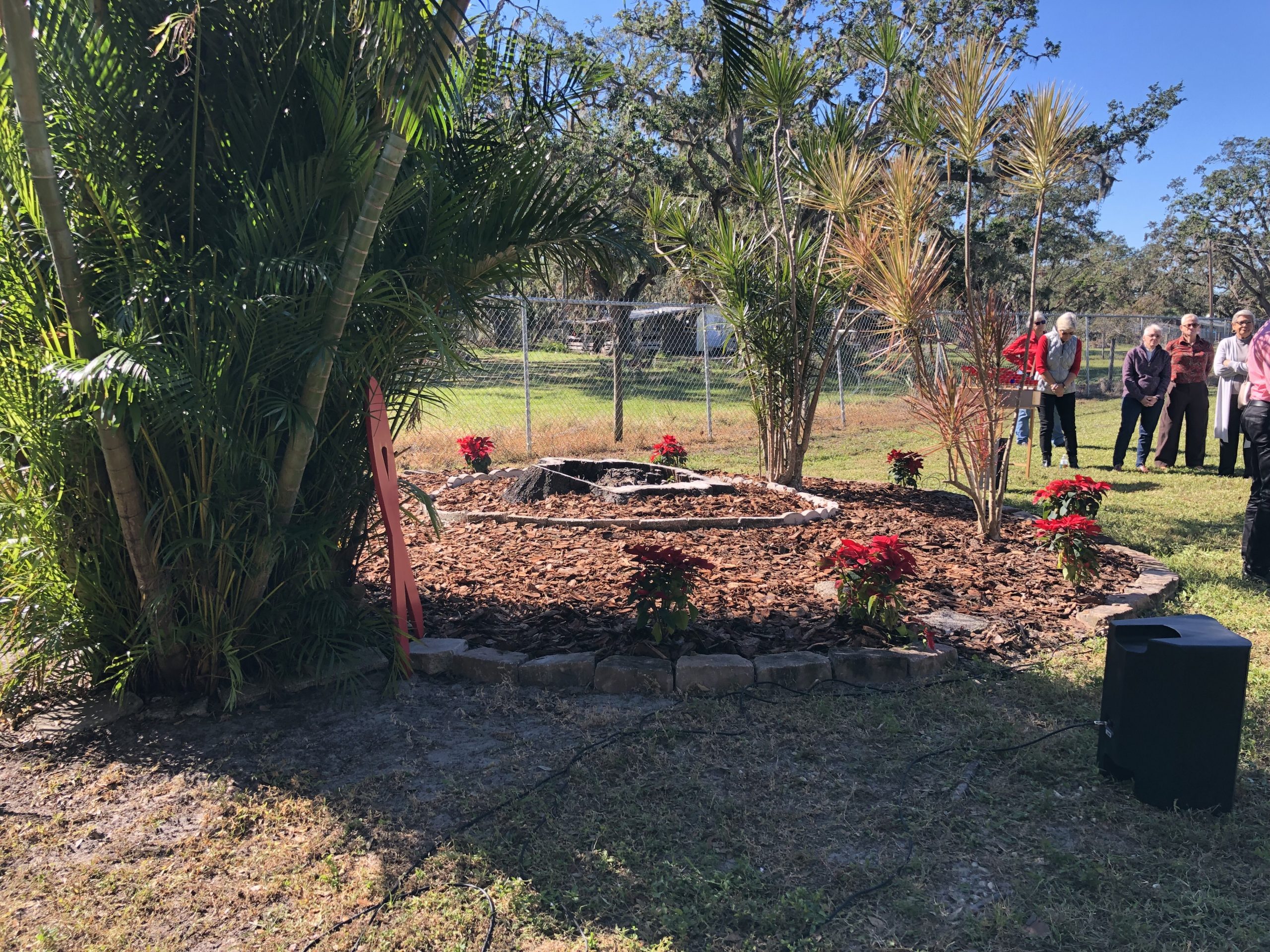
After the January 2024 storm, Trinity’s leaders were confronted with a problem. How could they clean up without disturbing the on-site human remains? Their solution was to remove the limbs and trunk, but leave the stump intact.
Now, thanks to a $25,000 grant from the Susan Terry Foundation, one of several in the Foundation’s inaugural grant-making cycle in 2025, the church plans to rebuild and rededicate the memorial to more effectively honor the memory of those individuals, both named and anonymous, for future generations.
The church intends the new memorial to play a multi-faceted role, honoring those lost to AIDS, providing a place to share the story of the AIDS epidemic and the church’s involvement in it, and recognizing the members of the LGBTQ+ community who stepped up to care for men with AIDS when medical professionals were hesitant to touch them.
According to Priar, restoring the memorial is an opportunity to preserve their legacy. He’s concerned that the history of the gay liberation movement and AIDS epidemic are not widely taught, resulting in a lack of understanding of their predecessors’ experiences.
“I’m hoping we can honor those who we’ve lost and the activism of so many in the community and folks like Susan Terry, and that my generation can take that mantle, to promise that we will never let this happen again and that we will fight because somebody before us had to fight too, and we carry their mantle wherever we go.”
JT PriarYoung Adult Minister, Church of the Trinity MCC
Moving forward: A more permanent reminder
Church of the Trinity congregants like Jesse Clayton, who moved to Bradenton from a small town in North Carolina in 1989 and joined the congregation in 1991, share a common devotion to the AIDS Memorial Garden. Jesse, a retired library director, has been a dedicated volunteer at the church for some 30 years. She’s been a lector and board member, worked on buildings and grounds projects, run the media department and helped the church get started in live streaming its events. Jesse admits to knowing very little about the AIDS pandemic and its fallout prior to moving here, but soon found a social and spiritual home in a congregation that embraced a significant number of gay men.
When thinking about the AIDS Memorial Garden, Jesse recalls many memorial services for men who died of AIDS. She also remembers Randy, a close friend who was HIV-positive and diagnosed with bone cancer. Randy’s passion was collecting toy robots. When Randy passed away on Thanksgiving Day 1995, a robot cookie jar became the vessel for his ashes. That cookie jar, Jesse recalls, was kept at the church until sometime in the early 2000s when his ashes were scattered, along with others, at the memorial.
Commenting on the plans for the memorial, Jesse said, “I’m extremely happy that we’re moving forward and doing something. It was wonderful having the tree, but the problem with living things is eventually they die. It’ll be nice to have something more permanent to remind us of all the things we’ve lost, guys who died without ever being able to fulfill their potential.”
An ambitious timeline for the AIDS Memorial planning committee
A six-member volunteer committee representing the areas of HIV services, sexual and reproductive health, and spirituality will oversee planning and installation of the new memorial. Committee members include Priar and Church of the Trinity MCC Senior Pastor Rev. Elder Lillie Brock; Dawnyelle Singleton, deputy organizing director for Planned Parenthood of SW and Central FL; MJ Jianelli, director of community engagement and prevention at the Sarasota-based sexual health provider Orenda Health and Wellness; Bernard Washington, Jr., prevention program manager at CAN Community Health; and Tristen Hynard, a CAN Community Health prevention specialist.
The committee will solicit proposals from artists, then make a selection and develop final plans by August 2026. Projected date for installation and dedication of the new AIDS Memorial is World AIDS Day, December 1, 2026.
They will have much to think about. According to Priar, “The committee is weighing some heavy considerations, like what will this garden mean to Sarasota? What does it mean to the history of the AIDS epidemic? For the Church and its physical environment? For younger generations like mine?” The committee will explore the different ways the memorial’s stories can be told, which may include some interactive elements to greet and inform visitors, and upgraded seating for quiet contemplation.
Priar is hoping the new AIDS Memorial will be capable of weathering any storm, meteorological or ideological, and that it will be, in his words, “An opportunity to talk about how far we’ve come, but also whose shoulders we stand on.”
About the Susan Terry Foundation
The Susan Terry Foundation, a 501c3 charitable organization, was established in 2024 to honor the life of the visionary leader and fearless advocate who founded CAN Community Health. With a mission to support communities affected by HIV, the Foundation advances prevention, education and care. Dedicated to knocking down the socioeconomic, educational and bureaucratic barriers faced by those living with HIV, the Foundation envisions a future where they are celebrated for their resilience, embraced without prejudice, and empowered to achieve their dreams.
Through its community-focused Grant Program, the Susan Terry Foundation supports mission-aligned opportunities and initiatives by individuals, organizations and research teams in the Tampa Bay region. To learn more, visit www.susanterryfoundation.org.