
Tampa Bay Nonprofit Uses a “Healthcare Without Walls” Approach to Fight HIV
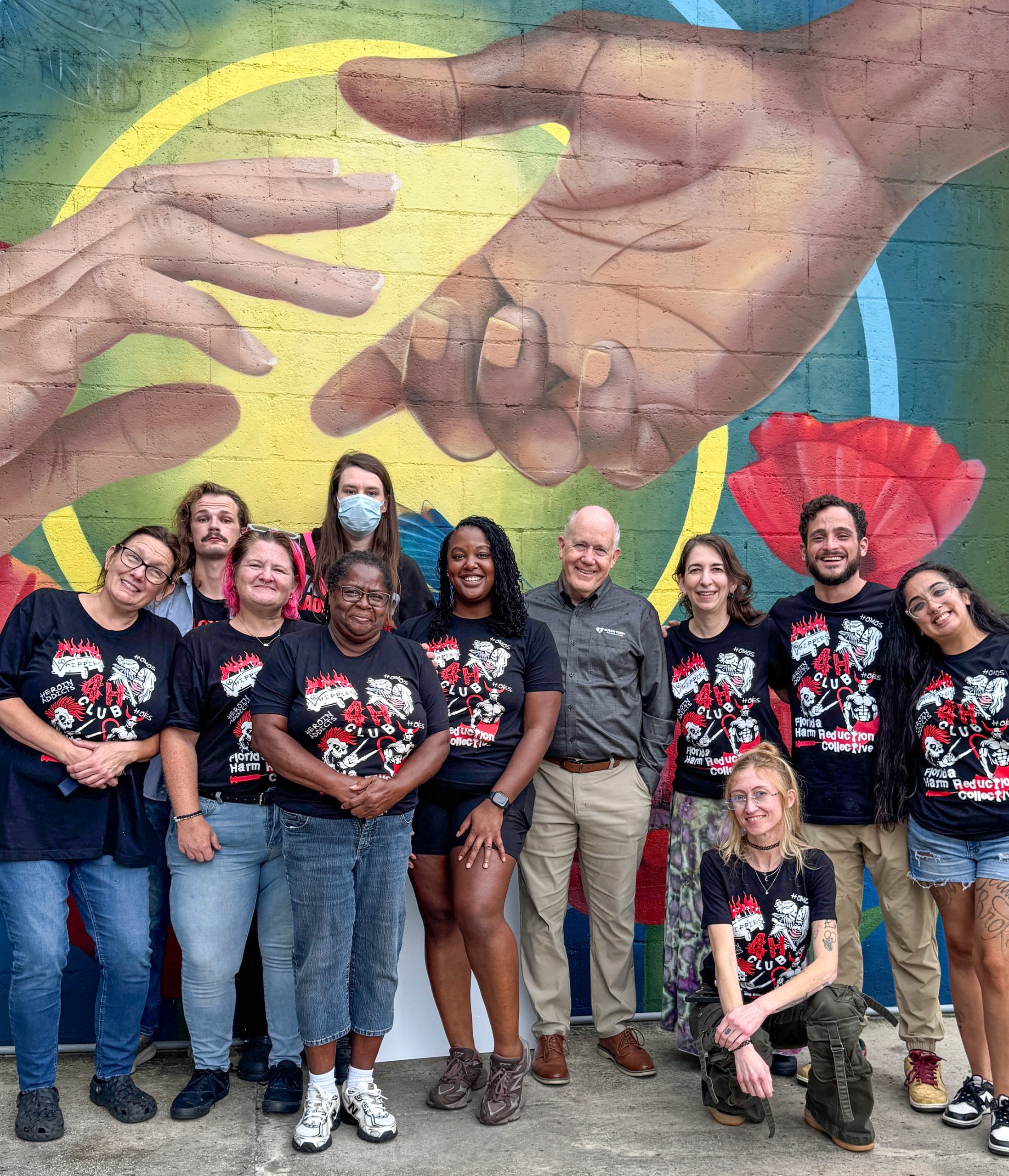
Supported in part by a $25,000 grant from the Susan Terry Foundation, a small Tampa Bay nonprofit is preparing to launch an intensive, street-forward outreach project that will apply the principles of harm reduction to reach vulnerable individuals, many of whom find shelter in homeless encampments and lack transportation, and help them adhere to life-saving care pathways. If successful, the program will contribute to the overarching public health goal of achieving new levels of viral suppression in the region.
Rooted in activism, fueled by lived experience
The Florida Harm Reduction Coalition (FHRC) has been operating as a nonprofit since 2021. Its mission is to connect people in Florida and throughout the South who use drugs, or with lived experience in drug use, to vital services and support them in making informed decisions toward healthier living. This group includes people with substance use disorder and who inject drugs (SUD/PWID).
The FHRC is a broad network of needle exchange or syringe services programs (SSPs), recovery community organizations, grassroots overdose response groups, legal experts and medical and behavioral health providers. Together, they work to address the toughest problems associated with this underrepresented and often transient population. In the Tampa Bay area, the group does street outreach with HIV and Hep C testing. It’s a heavy lift for a small nonprofit with a five-person staff and 10 to 12 volunteers.
For Tim Santamour, the group’s executive director, this work forms the capstone of a 40-year personal and professional journey. Informed by his own experience with drug use, Tim’s journey began in Buffalo, N.Y., in the early 1980s. In Buffalo, he went from setting up care circles for friends to organizing large demonstrations and pressuring politicians and providers to “do something about HIV” with the activist organization ACT UP (the AIDS Coalition to Unleash Power) in Western New York. He started a syringe access program in Buffalo, then moved to New York City in the mid-1990s, where he co-founded the Moving Equipment Harm Reduction Collective, a needle exchange program devoted to the LGBTQ community. In 2018, Santamour retired from his job at the New York State DMV, moved to Florida, and began doing the coalition-building work behind FHRC’s mission.
Reaching HIV-positive individuals who disengage from care
Perhaps more than any other factor, homelessness confounds public health efforts against the spread of HIV. In a perfect world, testing, treatment, data collection and other elements of traditional healthcare delivery could be executed seamlessly in clinical settings and at patients’ homes using standard patient navigation. Individuals living with HIV on the street, however, face a range of barriers to care that may include frequent displacement, incarceration, loss of insurance or income, lack of transportation options and mental health challenges. Some may be engaged in sex work. All are at risk of medication theft, or loss of medication when law enforcement conducts sweeps of homeless encampments and everything gets thrown away. And the street-based programs designed to reach them face challenges of their own, like chronic underfunding, restrictive rules and ordinances, and constrained on-site testing capabilities.
In Tampa Bay, FHRC conducts street outreach with HIV and Hepatitis C testing. They work with all of the SSPs around the state, and administer Alachua County's program. The group also distributes Naloxone, the medication that rapidly reverses opioid overdoses, and has just started an RNA Hepatitis C testing program.
With a new, 12-month public health project called EPIC IDEA: Implementing Infectious Disease Elimination Advocacy and Prevention, FHRC will coordinate teams of trained outreach workers and case navigators who will offer rapid HIV testing and expedited linkage to care services via telehealth providers or high-priority clinic appointments at providers like CAN Community Health and others. Navigating the realities of this population’s housing instability and lack of transportation, outreach workers and case navigators will also provide intensive adherence and retention interventions, and even arrange rides to care appointments via Uber Health when needed.
Santamour describes EPIC-IDEA as the natural expansion of an outreach program that’s already shown success in Tampa Bay. With a coverage area spanning five counties, Pinellas, Hillsborough, Polk, Pasco and a new expansion into Manatee, the project’s primary goal is to identify people with HIV/AIDS who are not engaged in care and increase viral suppression within this group. A similar secondary goal is to identify people with the Hepatitis C virus and link them to care and viral clearance.
According to information provided by FHRC, the project will also address ways to overcome structural barriers and minimize interruptions in treatment by arranging transportation, navigating pharmacy payment supports, implementing strategies for the secure storage and delivery of medications, and responding rapidly to displacement or law-enforcement sweeps of homeless encampments.
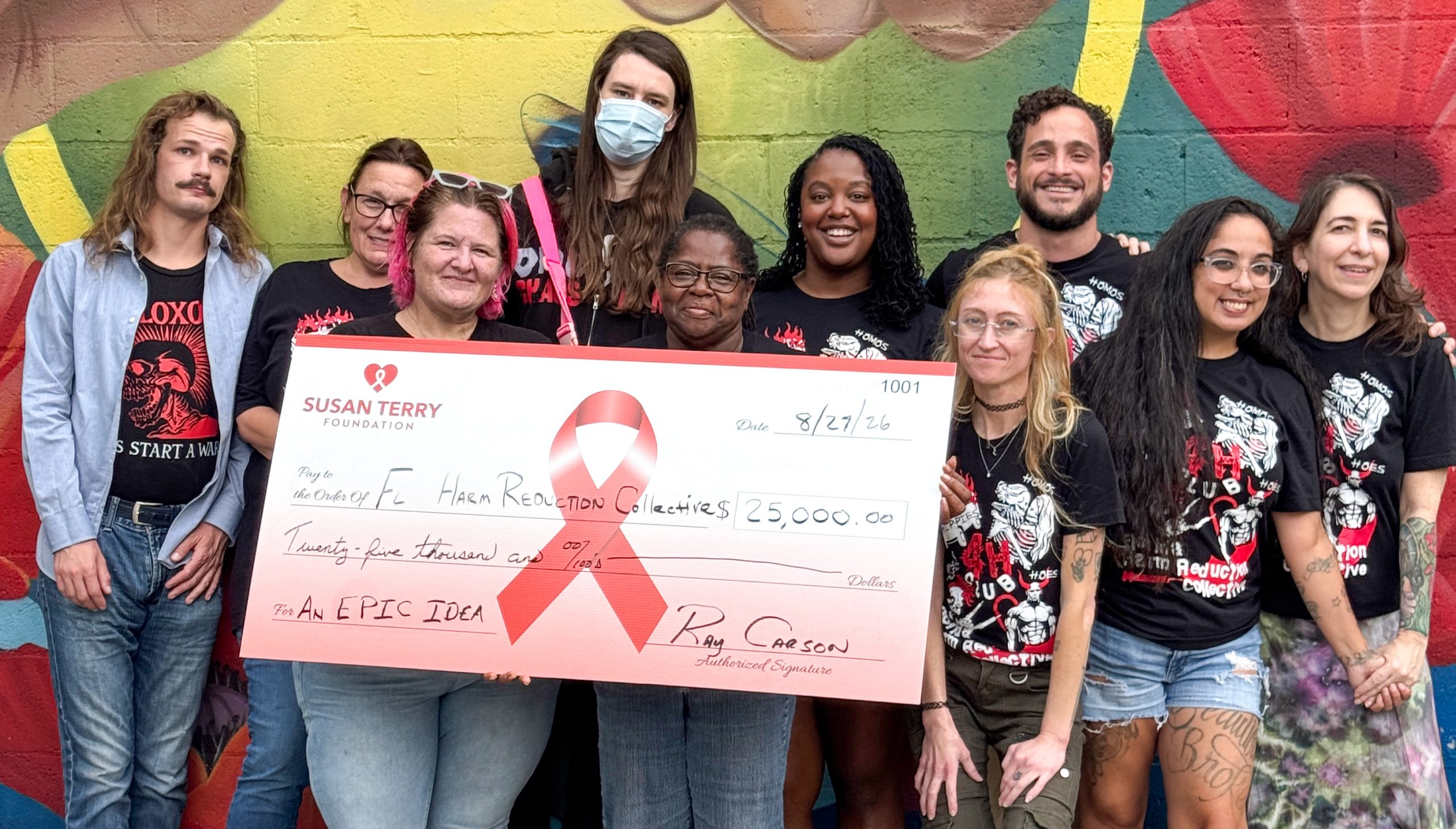
In applying for the STF grant, FHRC emphasized how homeless or unstably housed people with SUD/PWID can slip through the cracks of Florida’s HIV care system. The nonprofit attributes this disconnect to incomplete or inconsistent data on those who use drugs, and a complete lack of data on people of transgender experience. They also anticipate an increase in people living with HIV/AIDS disengaging from care due to the discontinuation of subsidies for Affordable Care Act insurance premiums.
Ray Carson, executive director of the Susan Terry Foundation, explained why the Foundation’s support of the FHRC’s efforts is so important, saying, “Keeping people engaged in HIV treatment is essential to reducing transmission. This Florida Harm Reduction Collective project bridges a critical gap, and their partnership with the University of Miami adds the research and evaluation needed to better understand and support this vulnerable population moving forward.”
Partnership with University adds strategic capabilities
Santamour values FHRC’s relationship with the University of Miami Miller School of Medicine, pointing to one research study showing that slightly more than half the people the collective was testing had never been tested before. “Reaching a population that's not getting tested, and getting them linkages to PrEP and treatment if they need it, and then the equipment they need to not transmit, that’s significant in keeping down not only HIV and hepatitis C down, but also bacterial infections, myocarditis (inflammation of the myocardium, the middle muscular layer of the heart wall) and other complications that come along with drug use,” he says.
For the EPIC IDEA project, IDEA Exchange Miami/University of Miami will provide data collection, monitoring and evaluation while tracking participants using anonymous unique identifiers to protect client privacy. The project will leverage the University’s T-SHARP (Telehealth Solution for HIV and Addiction-Related Problems Among People Who Inject Drugs) Tele-Harm Reduction (THR) model.
The University’s recently completed T-SHARP trial1 tested the effectiveness of a non-traditional THR approach to reducing the spread of HIV, and served as the inspiration for the EPIC-IDEA project. Instead of delivering services through standard patient navigation methods in clinical settings, the study engaged with people who inject drugs (PWID) with uncontrolled HIV at three Florida SSPs. In this way, several barriers to care, homelessness, lack of transportation, frequent displacement and others, were overcome.
The study found that among the patient group receiving services at SSPs, peer-facilitated THR resulted in significantly higher rates of sustained HIV viral suppression over 12 months, compared with standard patient navigation methods.
Relationship building is at the project’s core
What distinguishes this project most from similar community outreach programs, Santamour says, is relationship building. For example, the use of community health workers with lived experience to go into encampments and hotels, and on the sex worker strolls. “Our people are trusted in the community, much more than some stranger pulling up to an encampment in a van with a logo on the side. Someone who is not in the community regularly will be looked at very suspiciously. So for us, it's about developing those relationships with folks. And our people can be reached 24-7 if someone has an issue. That's a departure from what others are doing in brick-and-mortar or mobile-unit programs. We go right into the encampments and set up shop. We've done HIV and Hep C testing at encampments. We’ve set up semi-sterile areas to draw bloods. And we're able to do that anonymously because we're a syringe exchange program. That's been a game-changer in the Tampa Bay area.”
“Our people are trusted in the community, much more than some stranger pulling up to an encampment in a van with a logo on the side. Someone who is not in the community regularly will be looked at very suspiciously. So for us, it's about developing those relationships with folks. And our people can be reached 24-7 if someone has an issue. That's a departure from what others are doing in brick-and-mortar or mobile-unit programs.”
Tim SantamourExecutive Director
Florida Harm Reduction Collective
Santamour is realistic about the challenges of serving this population, but equally optimistic about the new patient-tracking capabilities he and his team will have, even when patients migrate to other counties. For him, measuring the program’s success will be simple. He says, “It’s just keeping folks in treatment, and finding them if they've fallen out of treatment.”
About the Susan Terry Foundation
The Susan Terry Foundation (a 501(c)(3) charitable organization) was established in 2024 to honor the life of the visionary leader and fearless advocate who founded CAN Community Health. With a mission to support communities affected by HIV, the Foundation advances prevention, education and care. Dedicated to knocking down the socioeconomic, educational and bureaucratic barriers faced by those affected by HIV, the Foundation envisions a future where they are celebrated for their resilience, embraced without prejudice, and empowered to achieve their dreams.
Through its community-focused Grant Program, the Susan Terry Foundation supports mission-aligned opportunities and initiatives by individuals, organizations and research teams in the Tampa Bay region.