
As a Brave Space for LGBTQ Youth, Florida’s Ballroom Scene Stages a Bold New HIV Prevention Program
The Central Florida Ballroom Collective (CFBC) is a nonprofit that promotes education, unity, service and creativity within the LGBTQ+ community and creates safe spaces for LGBTQ+ individuals and allies to authentically express themselves and celebrate their identities.
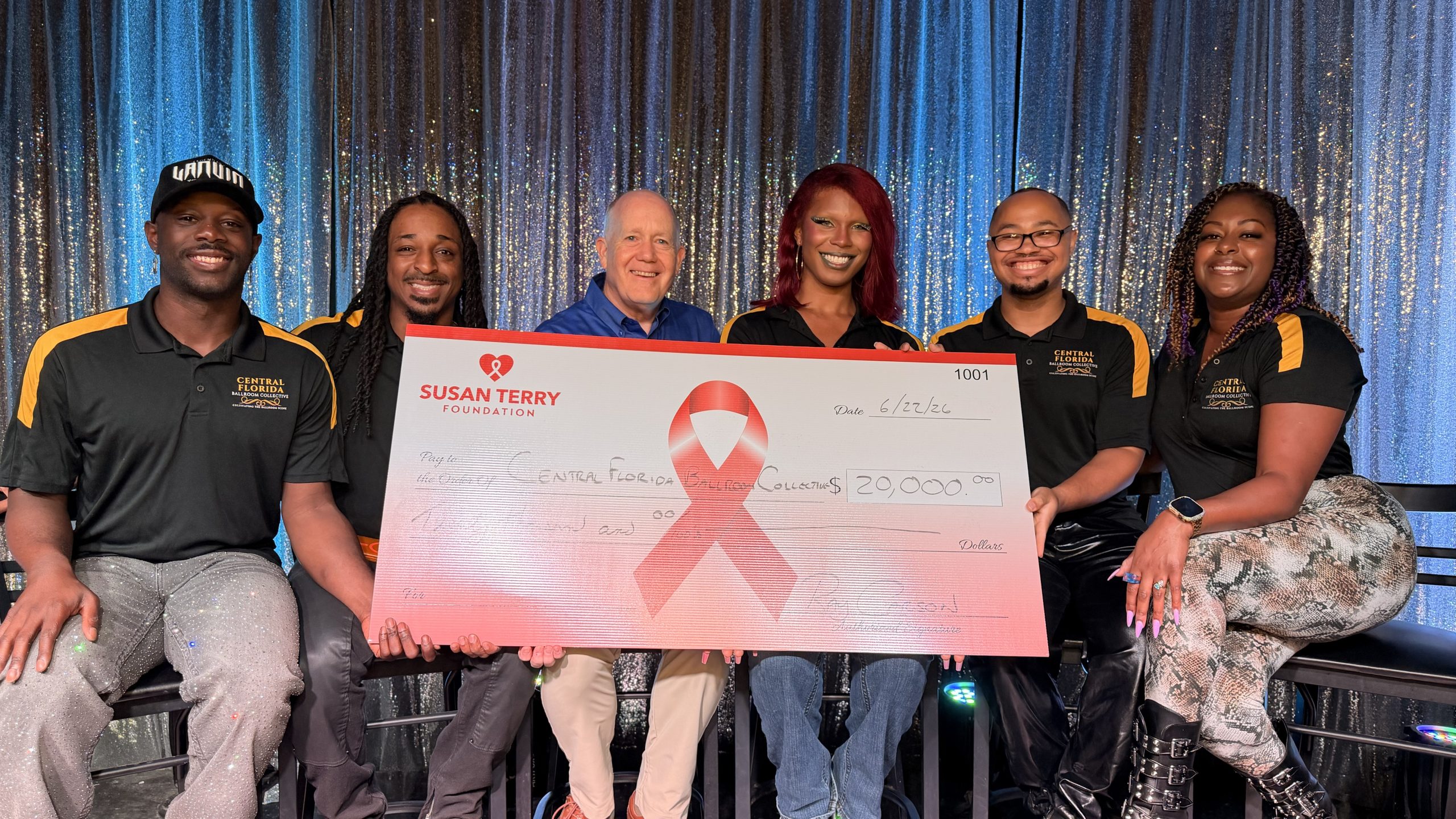
With the support of a $20,000 grant from the Susan Terry Foundation, the CFBC will launch a peer-led program to increase access to HIV education, prevention and care navigation.
Finding community in a thriving queer subculture
From its emergence as a cultural safe space for queer people of color during the Harlem Renaissance of the 1920s, Ballroom has long been influencing our language, mainstream entertainment, fashion and dance. As a New York City African-American and Latinx subculture responding to the racism found in mainstream drag pageants in the 1960s and 1970s, the Ballroom movement caught fire worldwide. After establishing itself in South Florida1 in the early 1990s, it spread statewide.
If the term “ballroom” brings to mind primetime TV’s “Dancing with the Stars,” you’ll want to change the channel. Existing much farther outside mainstream culture, the ballroom scene’s elaborately structured competitions support the frameworks of performance, fame and exclusive celebrity status in the subculture. Contestants adhere to very specific categories or themes, and are judged on a variety of criteria, including their dance skills, clothing, and "realness" (their ability to pass as a member of the stereotype, gender, or sex they are portraying).
For a better understanding, Jennie Livingston’s critically acclaimed 1990 documentary film Paris Is Burning2 is considered to be an accurate chronicle of the end of the Golden Age of New York’s ballroom scene. The film also documents the origins of “voguing,” the dance style celebrated in Madonna’s iconic music video released that year.
Today, Florida has an abundance of what Cadin Small describes as “brave spaces” where Ballroom is bigger than ever and people compete for cash prizes, accolades and, perhaps most importantly, find a sense of community. Small, a co-founder and executive director of the CFBC, is enthusiastic about its potential to be a force in HIV prevention. The Orlando native is an experienced community health navigator with a master’s degree in public administration from the University of South Florida.
Drawn to the small-campus vibe at USF St. Pete, Small worked in the Office of Multicultural Affairs, where he gained exposure to the diverse variety of people, groups and events there. During that time, he attended his first Ball and became immersed in the culture.
Recalling his introduction to the Ballroom scene, Small said, “I ran across this group online and I was like, oh, this is pretty cool. What is this? Why are these people gathering in the space and slamming their backs on the ground?”
Small co-founded the CFBC in 2023. The group operates with a five-member executive board and allocates responsibilities according to individuals’ strengths. Through a junior board initiative, Small, CFBC co-founder/VP Keisha Browne-Nieves-Rivera, and the rest of the board are looking to mentor the next generation of leaders, empowering the group to meet new challenges and opportunities with fresh perspectives.
Within a few short years, the collective’s high-energy leaders have established the group with a series of culturally cohesive events at partner venues like COhatch West Tampa and Disco Pony. Multi-day events like the annual Ballroom Weekend are held in larger venues and provide cash prizes and trophies in many categories, along with health and well-being resources.
Bridging gaps in HIV prevention
In 2026, the CFBC will launch its Ballroom Health Navigation and HIV Prevention Initiative. This low-cost, high-impact program will leverage the Ballroom scene’s duality as a space that is fiercely competitive, yet nurturing, to bridge the gap between healthcare systems and a vulnerable and underserved group of individuals. Many of them are likely to be estranged from their families of origin and even more likely to be mistrustful of traditional providers. Ballroom’s extended family structure, built around “houses” that serve as support systems and an atmosphere of mentorship and belonging, make it an ideal setting for a peer-led and community-based initiative like the CFBC project.
Three main components will enable the Ballroom Health Navigation and HIV Prevention Initiative to build relationships and encourage long-term engagement in HIV prevention and care:
- Culturally responsive HIV prevention education: Acting as Program Ambassadors, well-known and trusted members of the ballroom community will facilitate monthly, peer-led, community-based sessions focusing on reducing HIV stigma, routine testing, PrEP awareness and other pillars of HIV-related health education.
- Resource navigation and linkage to care: Program participants will be connected to local healthcare providers for HIV testing, access to PrEP, and treatment services. This component delivers the crucial, ongoing peer support required to keep participants engaged with their care and adhering to treatment pathways.
- HIV prevention support: This component of the initiative includes distribution of Safer Sex Kits, complemented by educational materials to reinforce prevention strategies and increase accessibility to the essential resources that form the backbone of modern HIV prevention. In the customized kits, localized healthcare provider information will be added to the standard contents, which include condoms, lube and information surrounding safe sex best practices.
In a program driven by trust, relationships make the difference
Small says there has been limited investment in peer-led approaches that meet people “where they are” and provide ongoing support beyond initial community engagement. Community outreach programs are typically driven by organizations outside of their target communities. With this project, inwardly focused and headed by members of its own tightly knit community, the CFBC is able to benefit from relationships that are in place before the conversations even begin.
“Ballroom has historically been a lifeline to the LGBTQ+ community, going back to the HIV/AIDS epidemic of the 1980s,” Small said. “So I wouldn’t describe this as a groundbreaking approach, but what makes it different is that our Health Ambassadors are already respected members of the community. They’ve already earned the trust of the people they’ll be reaching.”
It takes time to build that trust, and Small says that’s precisely what reveals another deficiency in traditional healthcare organizations’ sporadic attempts at community outreach – their high levels of staff turnover. He says while health systems’ good-faith efforts to build rapport with community members can make some positive impacts, the reality is that relationships undergo a complete reset every three to four years. Small says, “It can get exhausting for both the healthcare providers and the communities they try to reach. After a period of solid collaboration, all of a sudden it’s ‘Okay, hold on, who's this [new] person? What happened to Susie over there?’”
Susan Terry Foundation executive director Ray Carson recognizes trust as the secret sauce behind the Ballroom Health Navigation and HIV Prevention Initiative, saying, “We funded this project because it recognizes a simple truth: People are far more likely to seek care and make informed health decisions when information comes from someone they know and trust. The Central Florida Ballroom Collective team has built those relationships over many years, creating a strong foundation for HIV prevention, education, and care navigation. We believe this initiative can serve as a model for how community-led solutions address longstanding public health challenges.”
To stay ahead of the curve in relationship building and provide additional layers of services outside of the ballroom, the CFBC has cultivated relationships with organizations throughout Tampa Bay and Central Florida to advance efforts in men’s health, financial literacy and housing. They work with CAN Community Health and other care providers, the Hillsborough County Planning Committee, the Ujima Men's Collective, Chase Bank, KW Realty, Evolve Tampa Bay, St Pete Pride, and the Renaissance Theatre Orlando.
“Ballroom has historically been a lifeline to the LGBTQ+ community, going back to the HIV/AIDS epidemic of the 1980s, so I wouldn’t describe this as a groundbreaking approach, but what makes it different is that our Health Ambassadors are already respected members of the community. They’ve already earned the trust of the people they’ll be reaching.”
Cadin SmallExecutive Director
The Central Florida Ballroom Collective
By the numbers: Reaching specific project goals
The program’s overarching objective is to increase HIV prevention awareness and education. As a first step, the project will train 5-6 ballroom community members as Peer Health Ambassadors, equipping them with the knowledge and tools to deliver culturally competent education and support. The CFBC will conduct a minimum of 12 peer-led health education sessions over the 12-month project timeline. They will reach at least 150 unique participants to improve their knowledge of HIV prevention and measures like PrEP and routine testing.
To reach goals in the program’s second component, resource navigation and linkage to care, the project will connect at least 75 people to HIV testing, PrEP services or other healthcare resources. In this crucial project element, program Ambassadors will provide ongoing navigation support to keep individuals engaged with their healthcare and firm up their understanding of their care pathways. In many cases, this is as simple as making sure they attend all their scheduled healthcare appointments. Toward this goal, the project will work to establish or deepen relationships with at least two healthcare providers to streamline referrals.
Toward expanding access to HIV prevention resources, the goal will be to distribute at least 300 Safer Sex Kits with localized information about health providers.
Small’s knowledge of the Ballroom community fuels his optimism of the project’s ability to make a sustainable impact. He concedes that its success will hinge upon the Peer Health Ambassadors’ ability to use their “insider” status to sustain the Ballroom community’s trust. And he knows that trust itself is perhaps the most powerful public health intervention tool.
About the Susan Terry Foundation
The Susan Terry Foundation, a 501(c)(3) charitable organization, was established in 2024 to honor the life of the visionary leader and fearless advocate who founded CAN Community Health. With a mission to support communities affected by HIV, the Foundation advances prevention, education and care. Dedicated to knocking down the socioeconomic, educational and bureaucratic barriers faced by those affected by HIV, the Foundation envisions a future where they are celebrated for their resilience, embraced without prejudice, and empowered to achieve their dreams.
Through its community-focused Grant Program, the Susan Terry Foundation supports mission-aligned opportunities and initiatives by individuals, organizations and research teams in the Tampa Bay region. Learn more.
References
- Bein, Kat (July 24, 2014). "Vogue: A Seven-Part Guide to Ballroom Culture". Miami New Times.
- Levy, Emanuel (April 7, 2006). "Paris Is Burning".