Foundation Grant Helps Nonprofit Bridge the LGBTQ+ Mental Health Gap

In the Tampa Bay region and throughout Florida, a stubbornly high rate of new HIV infections and limited access to culturally competent mental health therapists compound the problem. Florida has the third-highest HIV prevalence rate among states and metropolitan areas in the United States, after Washington, D.C. and Georgia, according to 2026 data.2
Along with its partner organizations, the Sarasota-based Fabulous Arts Foundation (FabAF) has identified this critical gap in LGBTQ+-affirming mental health services and is taking action to narrow it. With support from the Susan Terry Foundation, the nonprofit is expanding its Fab Mental Health program, a community-centered mental health initiative that brings affirming therapy, clinician-led support groups and wellness workshops to members of HIV-affected communities. The program delivers trauma-informed, queer-competent care to promote self-acceptance, provide the tools needed to build emotional resilience and social networks, and diminish the deeply rooted stigma that can wall off individuals from success and belonging.
Who is the Fabulous Arts Foundation?
Founded in 2011 as the Harvey Milk Festival, FabAF now offers a year-round blend of arts, advocacy, wellness and mental health programming to strengthen the Sarasota LGBTQ+ community. With funding from the Johnson Singer Arts Education Fund, the Arts & Cultural Alliance of Sarasota County and other sources, and flagship events like the annual Fabulous Independent Film Festival and Be Fabulous Music and Arts Festival, the nonprofit combines arts programming with mental health support. It provides physical and emotional “safe spaces” that are stigma-free for gender-diverse and HIV-affected communities.
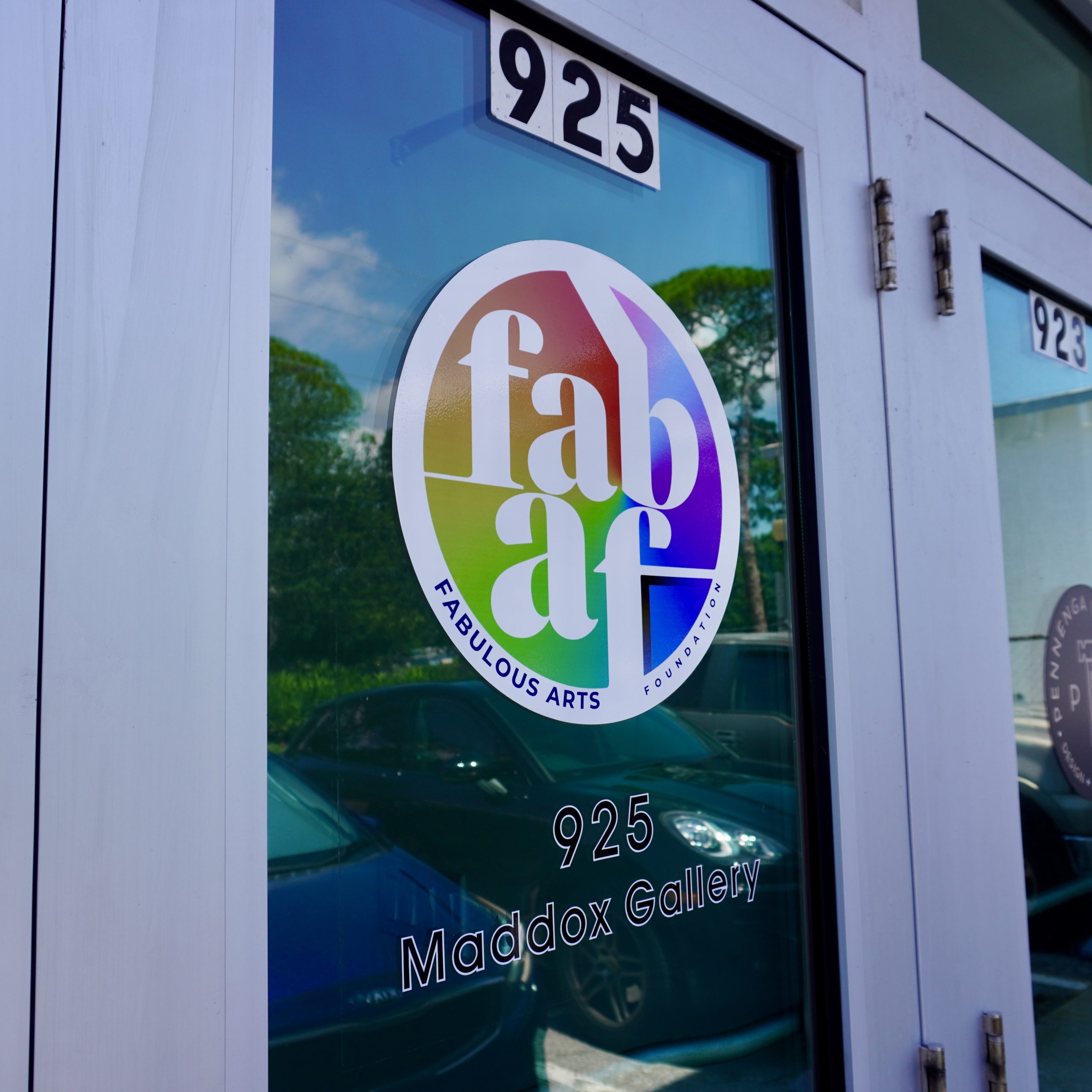
FabAF executive director Shannon Fortner describes the group’s new LGBTQ+ Community Center, located just north of downtown Sarasota on Lime Avenue, as Sarasota’s first non-profit queer arts and mental health hub, where LGBTQ+ and neurodivergent individuals can access mental health support and experience community connection under the same roof. Fortner stresses how people impacted by HIV often experience fear, stigma, or discomfort in traditional healthcare environments. By offering an environment that feels community-centered rather than clinical or institutional, the Center can remove some of those barriers.
FabAF launched its Fab Mental Health program in 2023 to connect LGBTQ+ individuals with affirming mental health services. Several peer support groups use creativity and communal activities to encourage healing and friendship. A group for neurodivergent individuals meets monthly with goals of fostering connection, understanding and peer support. In keeping with the nonprofit’s emphasis on affirming spaces for gender-diverse communities, “They/Them & Friends,” a group for nonbinary and gender-nonconforming individuals, and the Transformation and Transcendence (TNT) support group for the transgender community focus on building belonging and reducing isolation. The playfully named “Stitch and Bitch” group meets weekly for the demonstration and discussion of crafting projects, like puppets or costumes, around a welcoming, buffet-style table.

Foundation grant enables safer mental health pathways
Supported by a $35,000 grant from the Susan Terry Foundation, FabAF will expand the Fab Mental Health program, increasing its capacity to boost referrals, outreach and wraparound support (help with basics like nutrition, housing and transportation) to keep HIV-positive individuals on carefully mapped treatment pathways. Aligning with FabAF’s holistic approach, the funding will empower the Fab Mental Health program to fill a critical unmet need by:
- Increasing access to affirming mental health care by providing a minimum of 200 individual and group therapy sessions annually, conducted by licensed, culturally competent clinicians.
- Strengthening partnerships with HIV service providers like CAN Community Health and others.
- Covering the cost of telehealth software and materials to support outreach, participant engagement and wellness-based workshops.
- Establishing an emergency mental health fund that will provide limited financial assistance to those struggling to afford therapy or psychiatric care.
Anticipated program outcomes include participants’ reduced feelings of isolation, improved coping and self-regulation skills, and increased confidence in seeking mental health and HIV-related care. Clinicians will document participants’ progress and FabAF will use various qualitative and quantitative measures to assess the program’s effectiveness while maintaining strict client confidentiality.
Likening their mission to Susan Terry’s early advocacy of empowerment, connection and access to support, FabAF’s Fortner believes that healing doesn’t happen in clinical settings alone. Fortner is quick to remind us that, while advancements like antiretroviral therapy (ART) have made HIV a manageable chronic disease, significant barriers, including stigma, financial hardship, social isolation, discrimination, trauma, lack of affirming care, and difficulties navigating healthcare systems are all components of a cruel day-to-day reality for many members of the LGBTQIA+ community.
“The Susan Terry Foundation funding will help expand the reach and effectiveness of Fab Mental Health by allowing us to provide more accessible, trauma-informed, and LGBTQIA+ affirming mental health services for individuals who may otherwise go without care,” Fortner said. “The funding supports our ability to create safer pathways into mental health services through support groups, wellness programming, peer connection, educational opportunities, and access to affirming clinicians. It also allows us to strengthen outreach efforts to individuals who may feel disconnected from traditional systems of care.”
“The Susan Terry Foundation funding supports our ability to create safer pathways into mental health services through support groups, wellness programming, peer connection, educational opportunities, and access to affirming clinicians. It also allows us to strengthen outreach efforts to individuals who may feel disconnected from traditional systems of care.”
Shannon FortnerExecutive Director
Fabulous Arts Foundation
Culturally competent mental health professionals play a crucial role
Grace Korley, a Sarasota-based psychotherapist in private practice, has seen first-hand the difference culturally competent mental health counselors can make in helping LGBTQ+ individuals develop coping skills and overcome social isolation. She also advocates psycho-educational therapy groups that can be validating for people struggling with feelings that something is “wrong with them.”
Describing the expanded program’s potential impact, Korley said, “I’m a big advocate for groups, but I think the new funding will also help provide more of a teaching element, more workshops and things where people can be more engaged with one another. Something they can take home and do proactively, so they can experience something impactful for them or for other people in their community, and then come back and share those experiences.”

Not alone in their fight
Ray Carson, executive director of the Susan Terry Foundation, shares the enthusiasm, saying, “When care is rooted in community, it can restore dignity, break isolation, and remind everybody they’re not alone in their fight. With the Fab Mental Health initiative, the Fabulous Arts Foundation is filling a critical gap for those affected by HIV."
With people like Shannon Fortner and Grace Korley in their corner, LGBTQ+ and gender non-conforming individuals have even more reason to keep fighting, and to be genuinely optimistic. They are more than ready to experience a reality where stigma is kicked to the curb, healthcare resources are accessed confidently, and new connections are made as feelings of isolation melt away. And while there is quite a lot of work to be done, you wouldn’t be out of line to describe this new effort as simply “fabulous.”
About the Susan Terry Foundation
The Susan Terry Foundation, a 501(c)(3) charitable organization, was established in 2024 to honor the life of the visionary leader and fearless advocate who founded CAN Community Health. With a mission to support communities affected by HIV, the Foundation advances prevention, education and care. Dedicated to knocking down the socioeconomic, educational and bureaucratic barriers faced by those living with HIV, the Foundation envisions a future where they are celebrated for their resilience, embraced without prejudice, and empowered to achieve their dreams.
Through its community-focused Grant Program, the Susan Terry Foundation supports mission-aligned opportunities and initiatives by individuals, organizations and research teams in the Tampa Bay region. Learn more.
References
- Addressing Depressive Disorders Among People with HIV | National Library of Medicine: https://pmc.ncbi.nlm.nih.gov/articles/PMC6571985/
- HIV Surveillance Report: Diagnoses of HIV Infection in the United States and Dependent Areas, 2021, Centers for Disease Control and Prevention: https://stacks.cdc.gov/view/cdc/149071